
While designing my new website and this blog, a recurring question has been: what are those slideshow images? All those trees and water and close-ups of architectural details?
The decision to use images of elements from nature and architecture rather than images of finished work is a deliberate one. I wanted to showcase some of the things that inspire me, while paying homage to Mother Nature as the consummate designer.
I believe that as a design professional, a large part of my job is to bring my clients and their environments into harmonious, natural, and essential relationships with each other. To tell their stories with their spaces. If I am being commissioned by someone to do this important work, then I feel it is crucial to reveal some of my own process, to tell some of my own story. The slideshow images are one of the ways that I am doing this.
So, to answer the question in more detail, here are some of those images and a brief explanation of them.
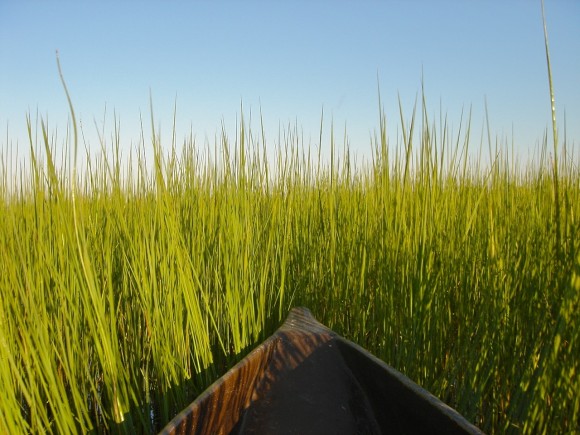
Above is the view of the reed grasses from a mokoro (similar to a canoe) in the Okavango Delta, Botswana.
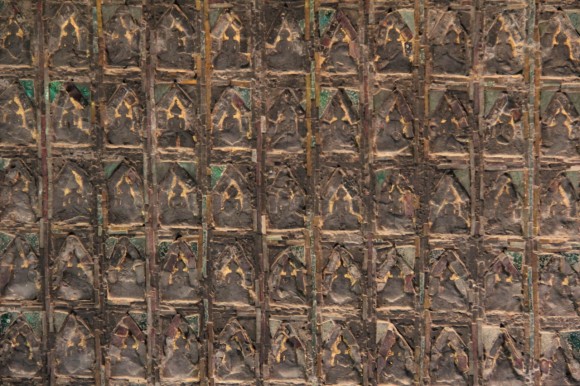
This is an ancient panel of Buddhas, probably Cambodian, that sat (and still sits) opposite Jim Thompson’s bedroom at the Jim Thompson house in Bangkok. I love the crumbling bas-relief and the repetition of images, which appear to be uniform but are actually each unique.
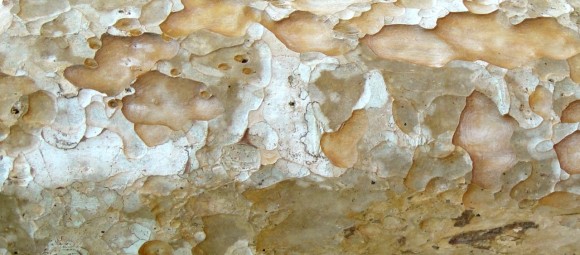
This is the bark of a Plane tree in London, where I lived for a long time. I have always been fascinated by exfoliating bark, and I can never resist the opportunity to touch it. It’s the texture-lover in me.
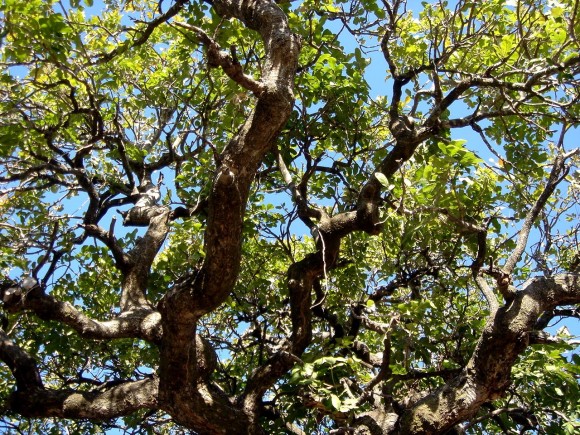
This is a favorite image and represents a favorite experience of mine. No doubt the image testifies to my love of trees and sky and the colors blue and green and brown together. But ever since I can remember, I love to lie down and look up at the sky through a tree like this. I have endless images of sky through trees. But this one, taken several years ago in South Africa, is a favorite.
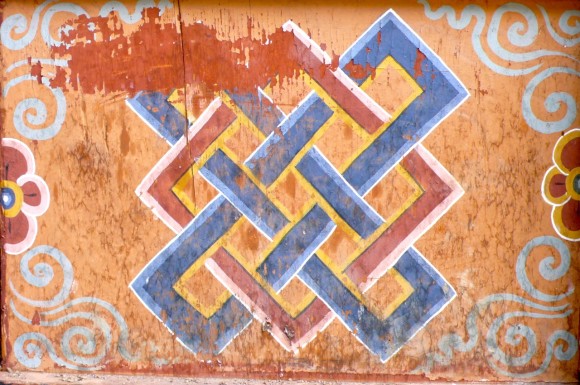
That’s an infinity knot from a wall panel at the Gangtey Gompa monastery in the Phobjikha Valley in Western Bhutan, where I visited last year. I like the combination of the geometric juxtapositions, the coloring, the patina, and of course, the reference to infinity and the reflection of a uniquely serene culture.
.
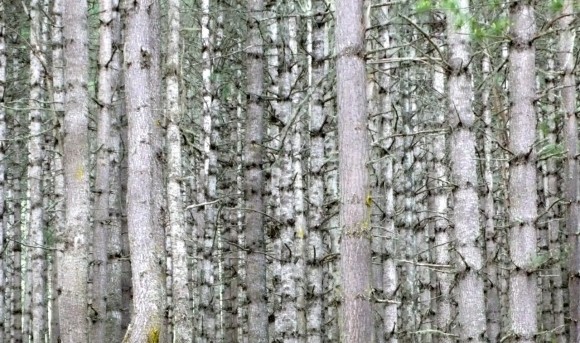
Here is a forest, again in the Phobjikha Valley of Western Bhutan. It’s not far from the infinity knot in the previous picture. In fact, I walked through the forest to reach the Gompa. Again, the themes of unique expression amongst seeming repetition, and the synergy between Nature and design come to mind.
And that’s just the water off the cost of Amagansett, Long Island, on a late winter’s day. I was there working, and took a break to visit the beach, where I found this perfect marriage of rhythm and color waiting for me.
As I review these images and write these descriptions, I am reminded of a poem that I discovered back in college, when I had every intention of becoming an English professor, and no idea that I would read and write my way into a career in design. The poem was one of my favorites then, and it still is today. In fact, I have an old photocopy of it on the bulletin board right above my desk.
It’s Alexander Pope’s An Epistle to Lord Burlington, and it is in this poem that he uses the famous phrase genius loci, which is Latin for “spirit of the place.”
To build, to plant, whatever you intend,
To rear the column, or the arch to bend,
To swell the terrace, or to sink the grot;
In all, let Nature never be forgot…
Consult the genius of the place in all;
That tells the waters or to rise, or fall;
Or helps th’ ambitious hill the heav’ns to scale,
Or scoops in circling theatres the vale;
Calls in the country, catches opening glades,
Joins willing woods, and varies shades from shades,
Now breaks, or now directs, th’ intending lines;
Paints as you plant, and, as you work, designs.
(You can read the poem in its entirety here).
As we create designs for interiors and gardens and products, we are working to honor, enhance, and sometimes create this spirit. Pope’s words are as relevant and timely today as they were in 1732. Onwards we go with our paints and our plants, working and designing.

Oh my goodness Malcolm, your web site is amazing to start, so cheers to that major feat. But the inspiration images are so.. I don’t know what! They make me feel like being still, like being reflective, like being an adventurer between the reeds in South Africa understanding my very small but very significant place in the world… Thanks so much for sharing!