
If you haven’t seen Luca Guadagnino‘s and Magnolia Pictures’ film I Am Love, do so as soon as possible. As far as I am concerned, it is essential viewing for anyone interested in design. It is a visual (and visceral) tour de force. Every single frame has been considered and resolved with the sublime in mind, from elaborate place settings at the dinner table to scallop-backed sofas beneath sunroom windows; from the Jil Sander dresses to the Fendi handbags; from the gleaming kitchens of Milan to the overgrown and seemingly-untended flowerbeds of the Italian countryside. It’s a visual feast through and through.
However, when all of this beauty ends in such tragedy (stop reading here if you haven’t seen the film!), I am left with this one, nagging thought: is design just as powerful a destroyer as it is a creator? It strikes me that the story of Emma Recchi – or one of her stories – is one of destruction by design.
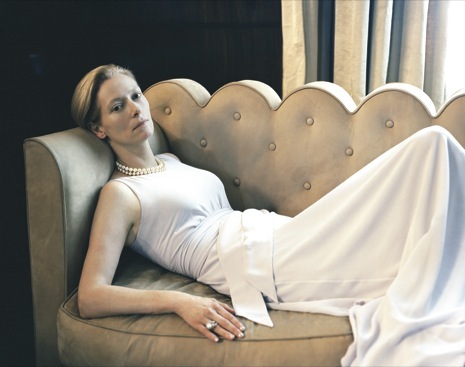
Emma Recchi (played so deftly by Tilda Swinton, one of the producers of the film) lives the beautiful life. This image from the I Am Love‘s Press Kit, pretty much says it all:
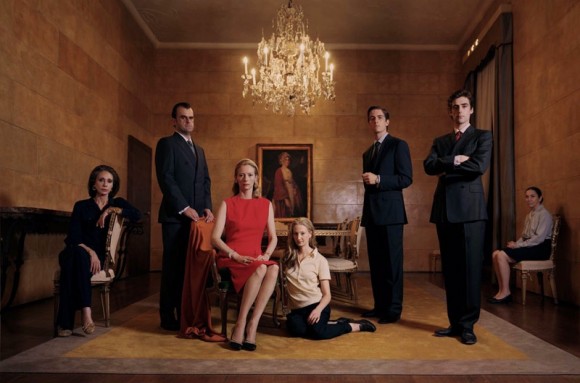
Note the supposed perfection in this photo. There is obvious pedigree in the perfect poise. Immaculate tailoring in all the clothing. Refined design in the interior elements. Further images illustrate the specifics of this elegantly rendered world:
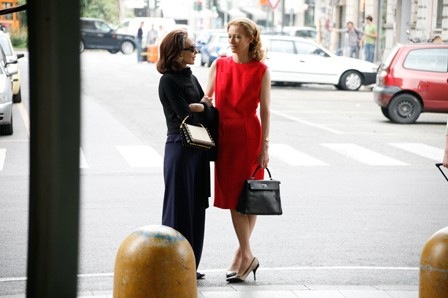
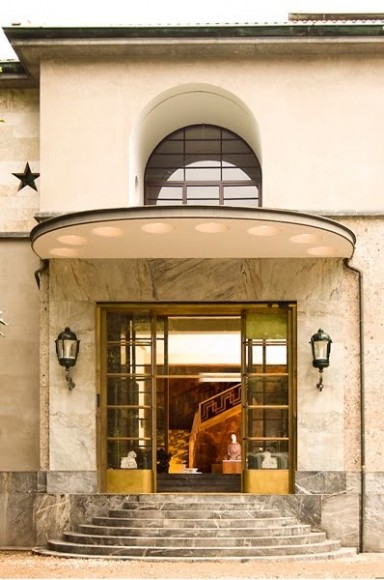
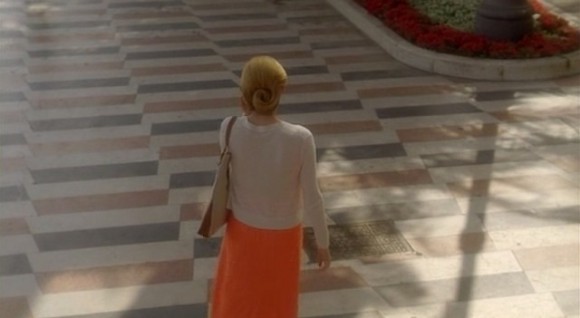
But the aesthetic perfection of her surroundings and circumstances ultimately suffocates Emma out of the “designed” life of the Italian bourgeoisie and into a life of personal authenticity, which is without such gorgeous trappings.
I remember watching the film and thinking to myself, “This is not a happy woman.” Such beautiful things – houses, clothes, people, parties – and yet never does she evince even the slightest bit of enthusiasm or elation, and especially not when she is at home. She has simply become her surroundings: another beautiful specimen fitting neatly into a glamorous storyboard.
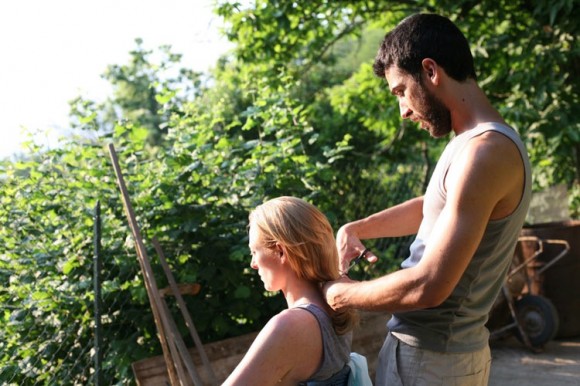
It is only when she ventures to the very un-designed setting of a hillside cottage within an overgrown garden and sits down next to an up-turned wheelbarrow that we see her happy. It is here, with her new lover, that lets passion consume her and then she gets a haircut, an undoubtedly symbollic shedding of her luxury trappings and explosion of her repressed feelings.
One thing leads to another, multiple tragedies ensue, and Emma Recchi ends the film looking like this:
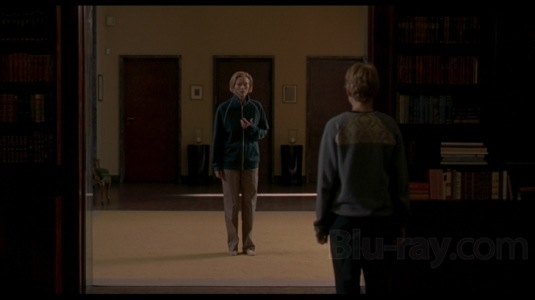
This is just after she’s stormed her carefully designed wardrobes for a random assortment of things, traded her fancy dresses for a track suit, and decided to abandon the beautiful life for…love. She stands and faces her daughter Betta, played by Alba Rohrwacher, who has made a similar decision at a younger age and with far less serious consequences. Betta is, after all, the one who cuts her hair first, opts out of the family business, pursues an academic career and a lesbian love affair, paying little to no attention of what the Milanese hoi-polloi has to say about it.
In the end, all the beautiful design in the world cannot make Emma Recchi happy. She has to follow her heart, even if it is at the expense of that house, those clothes, the chic parties and all the other gorgeousness and easiness that her life affords her. The fact that this ends up costing her (albeit it unintentionally) her son’s life, is only further testimony that the life she was living was bankrupting her to a most extreme extent. Only when she sheds her entire life as she knows it does she seem like she has a chance to be truly happy, and seriously liberated. It is almost as if even her potential happiness is made possible by the absence – or escape – from all of that design and decoration. Whether or not she can or will ever be happy given all that she occasions in the film is another question entirely, one which could and should be explored at some other time.
In the design trade, we spend a lot of time talking about how good design improves one’s quality of life. Design enhances us, inspires us, comforts us, and motivates us. We love it. We spend hours poring over shelter magazines and design blogs, thinking about how to decorate or dress better, where to shop and what to buy. It’s an endless quest to make things look and feel better.
I am a big believer that good design is about solving problems in an aesthetically and functionally pleasing way. It is about suitability and sustainability; about creating something for someone that is tailored to that person’s or family’s needs, wants, and lives.
It happens all too often that someone fixates on the acquisition of something, believing that once acquired, that item will not just solve a functional or aesthetic problem, but will also soothe a deeper, more internal and inherently non-material need or want. It’s that old syndrome we all know too well: the “If only….,” the “When I get…..,” or “Once I achieve…..” syndrome.
And so it happens. One thing leads to another, and we transfer our interior landscape onto our interior design, letting the supposed drive for design establish our point of view rather than letting out interiors be an extension and reflection of who we are and what we really like, want, and need to sustain and nourish our sense of self.
And so the question is: at what point does all of this beauty, all of this good design, run the risk of bankrupting the life of the people who live – or want to live – within it? At what point does design override personal authenticity? What happened to Emma Recchi in the Villa Necchi? At what point did she lose the plot? At which juncture did she sacrifice her deep heart’s truth for her materialistic temporal pleasure?
In its true form, design aims to enhance, promote, and encourage us to be our authentic selves. At least I like to think so. It should provide us with arenas in which we feel comfortable acting out our own individual circuses. It should allow us to tell our stories through our spaces, not allow our spaces to dictate our stories. Just because it’s beautiful does not mean it’s suitable or even good for us.
In an interesting article about the Villa Necchi on “The Faster Times“, Andrew Myers writes that the villa “…is not a house that charms, but its pull and power are undeniable. It’s a crushing kind of beauty, not one to comfort or accommodate human frailty. And that’s exactly the point—and exactly what makes it perfect for I Am Love. Here, the dreams of rationalist architects beget monsters.”
Personally, I say if it’s somewhere that a human being is living, then the place better make some provision for human frailty. Why live there otherwise? To subjugate one’s humanity? To pretend that one has no weakness, no need for refuge, retreat, rejuvenation? That’s what a house is (partly) for as far as I’m concerned.
Take a look at the real Villa Necchi by watching this video:
It’s nothing like the one portrayed in I Am Love. For sure, the film version is infinitely more glamorous and chic (and I could watch that film over and over and over again just for the visuals). But the verison above is somehow more alive. It’s almost as if the film’s version is too perfect. Awfully good, as the saying goes, with the pun fully intended.
When push comes to shove, I’ll take the authentic over the fabricated, and if that means a little less glam, then so be it.
Give me the Villa Necchi over the Villa Recchi any day.